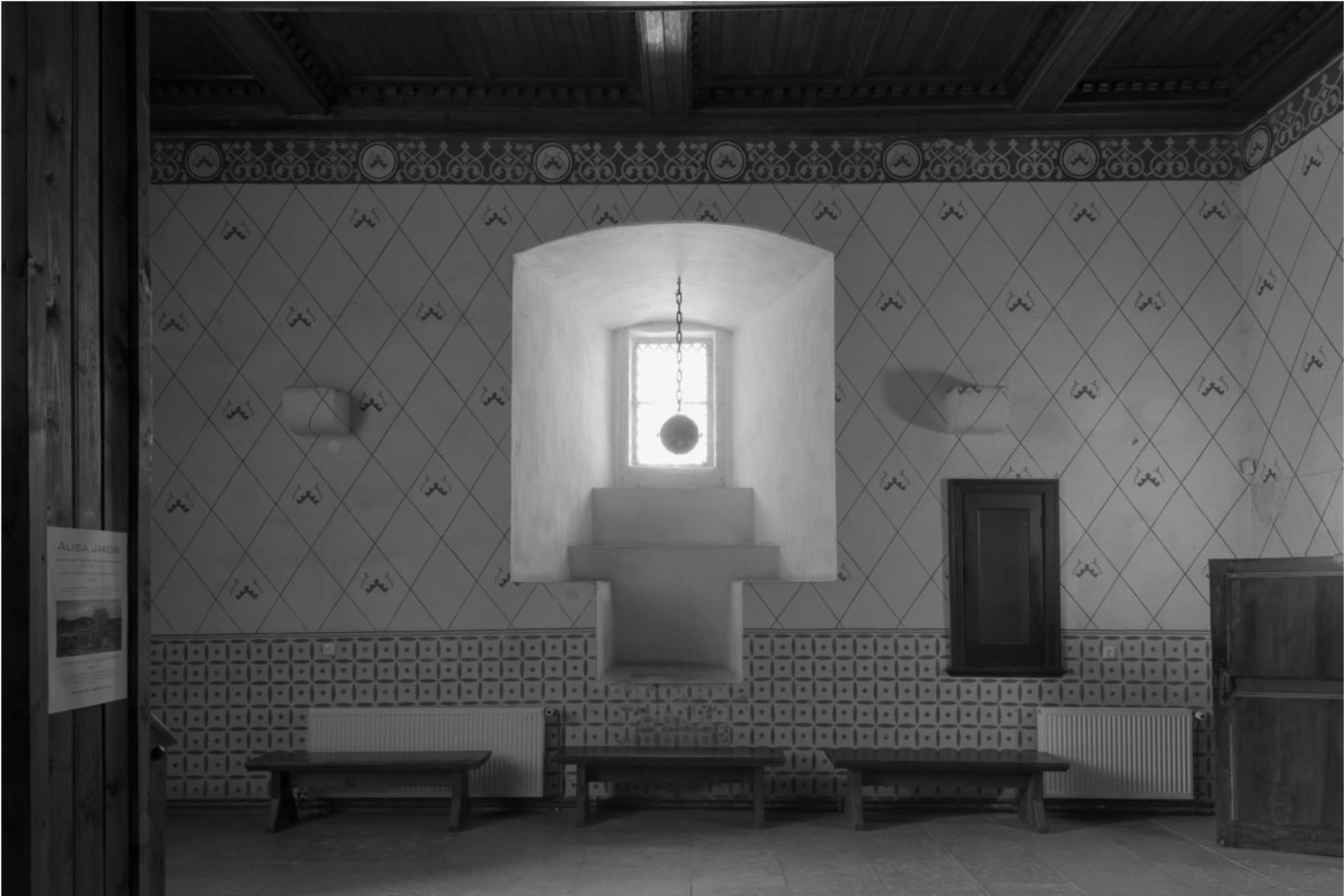
Creating a responsible architecture requires a deep understanding of daylight—its nature and behaviour as it interacts with a room, its structures and material surfaces. This understanding enables a more conscious use of daylight — an available, free, constant energy source, that is essential for our health and well-being.
This course investigates how relationship between proportions of space, order of the structure, material surfaces, geometry and placement of light-openings affect daylight conditions in architectural spaces at high latitudes.
The objective is to raise awareness of local specificity when it comes to climate and context — and to explore the potential of using daylight and structure as the main generator for architectural investigations.
At the Northern Latitudes, we live and build under similar daylight conditions. While the climate changes, daylight remains largely constant over time on the same latitude. In this region we build in a unique climatic condition and share a cultural heritage and building tradition that has been shaped by the nature of the place itself.
How can both the measurable and intangible aspects of Daylight and Structure contribute to defining a responsible architecture that belong to a Place?
Students will be introduced to both analogue and digital tools, encouraging students to do spatial explorations with daylight and structure as the starting point of their spatial explorations:
The site: Kurresaare, Saaremaa (Island) in the Baltic Sea (Estonia).
The program: Educational Center (Louis I. Kahn Estonia Foundation)
The studio is part of an international collaboration with TalTech Tallin, ETH Zürich, Studio Boltshauser, UPenn and a Nordic collaboration on a research-based teaching in daylight (and is an extension to the Elective “Nordic Light in Architecture”)
This course investigates how relationship between proportions of space, order of the structure, material surfaces, geometry and placement of light-openings affect daylight conditions in architectural spaces at high latitudes.
The objective is to raise awareness of local specificity when it comes to climate and context — and to explore the potential of using daylight and structure as the main generator for architectural investigations.
At the Northern Latitudes, we live and build under similar daylight conditions. While the climate changes, daylight remains largely constant over time on the same latitude. In this region we build in a unique climatic condition and share a cultural heritage and building tradition that has been shaped by the nature of the place itself.
How can both the measurable and intangible aspects of Daylight and Structure contribute to defining a responsible architecture that belong to a Place?
Students will be introduced to both analogue and digital tools, encouraging students to do spatial explorations with daylight and structure as the starting point of their spatial explorations:
The site: Kurresaare, Saaremaa (Island) in the Baltic Sea (Estonia).
The program: Educational Center (Louis I. Kahn Estonia Foundation)
The studio is part of an international collaboration with TalTech Tallin, ETH Zürich, Studio Boltshauser, UPenn and a Nordic collaboration on a research-based teaching in daylight (and is an extension to the Elective “Nordic Light in Architecture”)
- ஆசிரியர்: Kathrine Næss
- ஆசிரியர்: Arnkell Jonas Petersen
- ஆசிரியர்: Cathrine Vigander